اسکریپتی برای کار با pacman
18 ژوئن 2024 زمان خواندن: 8 دقیقه
مدتها بود که یک اسکریپت دم دستی رو برای راحت تر کردن فانکشنهای پکمن استفاده میکردم. که البته ایرادهای فنی و اسکریپتی زیادی داشت. سر انجام با راهنمایی های چند تا دوست خوب توی گروه های آرچ، دستی به سر و روی اسکریپت کشیدم.
هدف این اسکریپت اینه که یک سری عملکردهای رایج و به درد بخور پکمن رو که بعضا دستورات بلندی میشن و نمیشه به یاد سپرد، به دستورات کوتاه تبدیل کنیم.
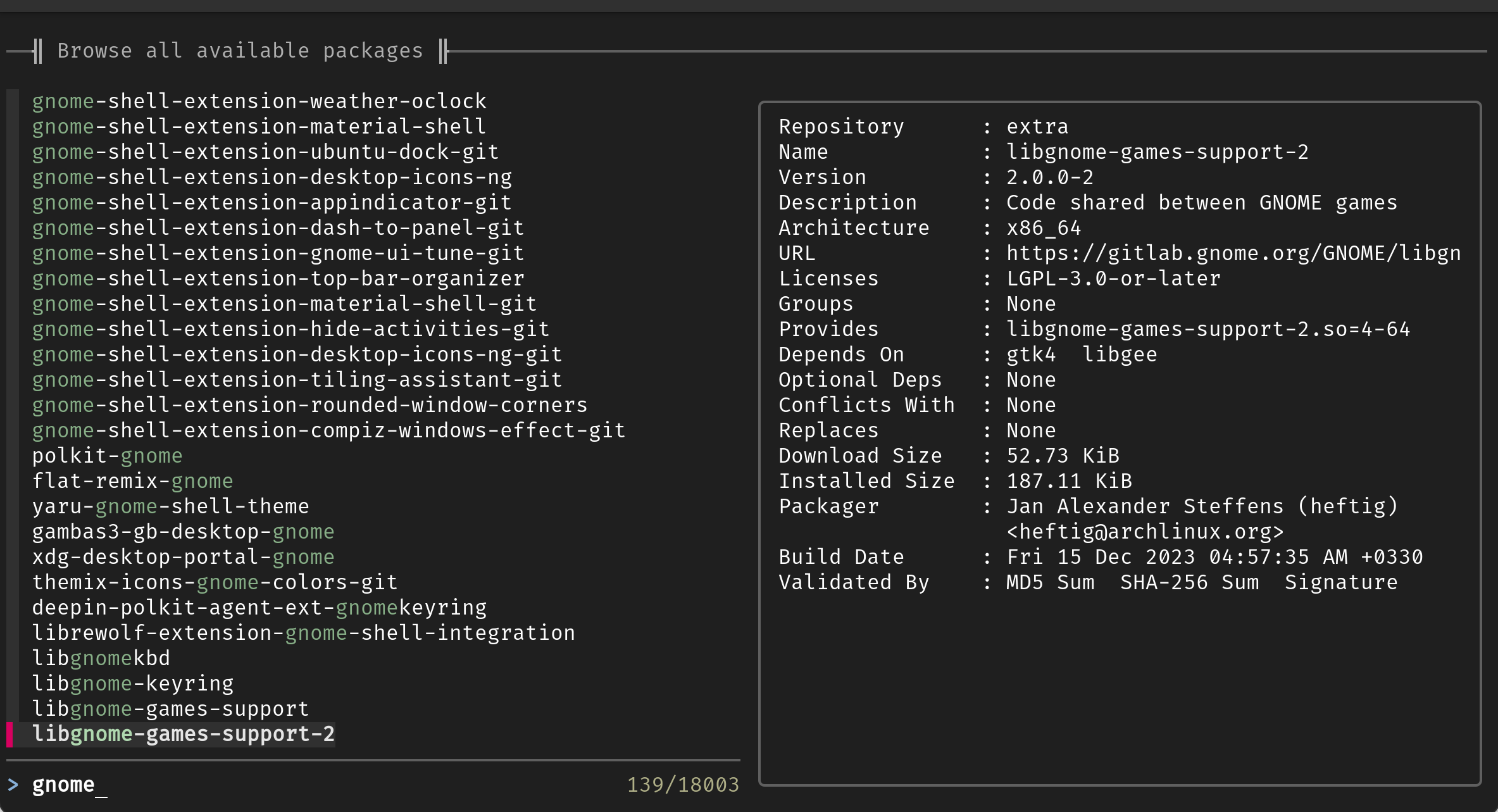
ویژگی ها و کارهایی که این اسکریپت میکنه:
- استفاده از یک AUR Helper به دلخواه خودتون (پیشفرض: yay)
- استفاده از sudo یا doas به دلخواه خودتون (پیشفرض: sudo)
- جست و جوی پکیج ها در مخازن رسمی و AUR
- نصب پکیج (ها) چه از مخازن چه از فایل، با یک دستور ثابت
- پیدا کردن بسته ای که صاحب یک فایل خاصی است
- نمایش اطلاعات یک بسته
- حذف بسته ها با/بدون حذف بسته های وابسته
- حذف بسته های orphan
- آپدیت کل سیستم با کمک AUR Helper
- یافتن سریعترین میرورها (با reflector)
- نمایش دپندنسی های یک بسته
- نمایش بسته هایی که به یک بسته وابسته هستند.
- نمایش محتوای یک فایل درون فایل فشرده یک بسته tar
- نمایش لیستی از بسته ها با این ویژگیها:
- تمامی پکیج ها (نصب شده یا نشده)
- بسته های نصب شده
- بسته های orphan
- بسته هایی که خارج از پکیج منیجر نصب کردیم
- بسته هایی که هیچ بسته دیگه ای به اونها وابستگی نداره
- بسته هایی که قابل بروزرسانی هستن
- قابلیت جست و جوی بسته ها درون این لیست ها
- ذخیره یک فایل در پوشه کاربر حاوی لیست تمامی پکیج های نصب شده
- پاکسازی کش پکمن
- آنلاک کردن دیتبایس با حذف فایل db.lck
برای استفاده از این اسکریپت، میبایست یک سری ابزار رو نصب کنید:
$ sudo pacman -S pacman-contrib reflector fzf pkgfile
اسکریپت زیر رو در یک جایی مثلا در /usr/local/bin قرار بدید یا براش alias بسازید، و مجوز اجرایی رو هم بهش بدید. در متن اسکریپت نگاه کنید و متغیر HELPER=yay رو به چیزی که خودتون دارید تغییر بدید. همین طور اگر از doas به جای sudo استفاده میکنید، در متغیر SUSR=sudo اون رو هم تغییر بدید.
روش کار هم ساده است. مثلا برای نمایش لیستی از پکیج هایی که نصب داریم، میتونیم بنویسیم:
$ pm -bi
اگر شما هم فانکشن به درد بخوری رو سراغ دارید که میتونیم اضافه کنیم، کامنت کنید.
متن اسکریپت:
#!/bin/sh
#
# pm is a simple script to make working with pacman easier
# Author: Amin medicamin@gmail.com http://linuxvaman.ir
# Based on https://github.com/IndrekHaav/pac
#

set -eu

RESET="\033[0m"
RED="\033[1;31m"
BOLD="\033[1m"

#Change if you have another AUR helper
#Or replace yay with pacman if you don't use AUR at all.
HELPER=yay

#You may use another super user helper, such as doas
SUSR=sudo

#You can define search options based on your needs
#Change if you use helpers other than yay, or leave it blank
HELPERSEARCH=--topdown

__usage() {

    cat <<EOF
Usage: $(basename "$0") command
$(echo -e "${BOLD}Requirements:${RESET}") pacman-contrib reflector fzf pkgfile yay (or other AUR helpers)

$(echo -e "${BOLD}Working with Packages${RESET}")
    -s,  search <string>	Search for packages matching <string>
    -f,  find <file>		Find the package owner of the file (path or name)
    -sh, show <packages>	Returns information about <packages>
    -i,  install <packages>	Install <packages>
    -r,  remove <packages>	Remove <packages>
    -rd, removedep <packages>	Remove <packages> and all their dependencies
    -ro, removeorphan		Remove all orphan packages and their dependencies
    -u,  update			Perform a full system upgrade
    -m,  mirrors		Generate mirrorlist sorted by 10 fastest servers
    -d,  depends <package>	Shows a list of dependencies for <package>
    -do, dependson <package>	Shows a list of packages that depend on <package>
    -v,  view			Display content of a file inside a tar package

$(echo -e "${BOLD}Browse packages${RESET}")
    -bd, database	  	Browse all available packages
    -bi, installed	  	Browse all installed packages
    -bf, foreign	  	Browse all manually installed packages
    -bn, nodeps	  		Browse packages with no dependency
    -bo, orphans	  	Browse orphan packages
    -bu, updatable	  	Browse upgradable packages
    -l,  list			Create a list of installed packages in the home directory

$(echo -e "${BOLD}Pacman Database${RESET}")
    -c,  clean			Clear pacman cache, keeps only latest package
    -p,  purge			Clear pacman cache, keeps nothing
    -db, unlock			Unlock database by removing /var/lib/pacman/db.lck

EOF
    exit
}

__error() {
    printf "${RED}error:${RESET} %s\n" "$1"
}

__fatal() {
    __error "$1"
    exit 1
}

[ "$#" -gt 0 ] || __usage

case "$1" in

    -s|search) #Search for packages matching <string>
        shift
        command -v $HELPER > /dev/null || __fatal "change HELPER in the source or install yay"
        [ "$#" -eq 1 ] || __fatal "enter a search term"
        $HELPER -Ss "$@" $HELPERSEARCH
        ;;

    -f|find) #Find the package owner of the file (path or name)
        shift
        command -v pkgfile > /dev/null || __fatal "install pkgfile to use this functionality"
        [ "$#" -gt 0 ] || __fatal "enter something"
        pkgfile "$@"
        ;;

    -sh|show) #Returns information about <packages>
        shift
        [ "$#" -gt 0 ] || __fatal "enter a package name"
        for package in "$@"; do
            pacman -Qi "$package" 2>/dev/null || pacman -Si "$package" 2>/dev/null || __error "package '$package' was not found"
        done
        ;;

    -i|install) #Install <packages>
        shift
        [ "$#" -gt 0 ] || __fatal "enter a package name"
        if [ -f "$*" ]; then pacman -U "$*"; else $HELPER -S "$@"; fi
        ;;

    -r|remove) #Remove <packages>
        shift
        [ "$#" -gt 0 ] || __fatal "enter a package name"
        $SUSR pacman -R "$@"
        ;;

    -rd|removedep) #Remove <packages> and all their dependencies
        shift
        pkgs=${*:-$(pacman -Qdtq)}
        # shellcheck disable=SC2086
        [ -n "$pkgs" ] && $SUSR pacman -Rns $pkgs
        ;;

    -ro|removeorphan) #Remove all orphan packages and their dependencies
        pacman -Qdtq | $SUSR pacman -Rns -
        ;;

    -u|update) #Perform a full system upgrade
        $HELPER -Syu
        ;;

    -m|mirrors) #Generate mirrorlist sorted by 10 fastest servers
        shift
        command -v reflector > /dev/null || __fatal "install reflector to use this functionality"
        $SUSR reflector --age 6 --fastest 10 --latest 10 --sort rate --protocol https --save /etc/pacman.d/mirrorlist
        ;;

    -d|depends) #Shows a list of dependencies for <package>
        shift
        command -v pactree > /dev/null || __fatal "install pacman-contrib to use this functionality"
        [ "$#" -gt 0 ] || __fatal "enter a package name"
        pactree -s -d1 -o1 "$@"
        ;;

    -do|dependson) #Shows a list of packages that depend on <package>
        shift
        command -v pactree > /dev/null || __fatal "install pacman-contrib to use this functionality"
        [ "$#" -gt 0 ] || __fatal "enter a package name"
        pactree -r -s -d1 -o1 "$@"
        ;;

    -v|view) #Display content of a file inside a tar package
    	shift
    	[ "$#" -gt 1 ] || __fatal "example: pm -v /path/to/package.pkg.tar.zst etc/file.conf "
        bsdtar -xOf $2 $3
        ;;

     -bd|database) #Browse all available packages
        shift
        command -v pactree > /dev/null || __fatal "install fzf to use this functionality"
        pacman -Slq | fzf -e --padding=4%,0,0,0 --margin=4%,0,0,0 --no-scrollbar --info=inline-right  --border=top --border-label='╢ Browse all available packages ╟' --border-label-pos=3 --preview 'pacman -Si {}' --layout=reverse-list
        ;;

     -bi|installed) #Browse all installed packages
        shift
        command -v pactree > /dev/null || __fatal "install fzf to use this functionality"
        pacman -Qq | fzf -e --padding=4%,0,0,0 --margin=4%,0,0,0 --no-scrollbar --info=inline-right  --border=top --border-label='╢ Browse all installed packages ╟' --border-label-pos=3 --preview 'pacman -Qil {}' --layout=reverse-list --bind 'enter:execute(pacman -Qil {} | less)'
        ;;

     -bf|foreign) #Browse all manually installed packages
        shift
        command -v pactree > /dev/null || __fatal "install fzf to use this functionality"
        pacman -Qqm | fzf -e --padding=4%,0,0,0 --margin=4%,0,0,0 --no-scrollbar --info=inline-right  --border=top --border-label='╢ Browse all manually installed packages ╟' --border-label-pos=3 --preview 'pacman -Qil {}' --layout=reverse-list --bind 'enter:execute(pacman -Qil {} | less)'
        ;;

     -bn|nodeps) #Browse packages with no dependency
        shift
        command -v pactree > /dev/null || __fatal "install fzf to use this functionality"
        pacman -Qqent | fzf -e --padding=4%,0,0,0 --margin=4%,0,0,0 --no-scrollbar --info=inline-right  --border=top --border-label='╢ Browse installed packages without dependency ╟' --border-label-pos=3 --preview 'pacman -Qil {}' --layout=reverse-list --bind 'enter:execute(pacman -Qil {} | less)'
        ;;

     -bo|orphans) #Browse orphan packages
        shift
        command -v pactree > /dev/null || __fatal "install fzf to use this functionality"
        pacman -Qdtq | fzf -e --padding=4%,0,0,0 --margin=4%,0,0,0 --no-scrollbar --info=inline-right  --border=top --border-label='╢ Browse orphan packages ╟' --border-label-pos=3 --preview 'pacman -Qil {}' --layout=reverse-list --bind 'enter:execute(pacman -Qil {} | less)'
        ;;

     -bu|updatable) #Browse upgradable packages
        shift
        command -v pactree > /dev/null || __fatal "install fzf to use this functionality"
        pacman -Qu | fzf -e --padding=4%,0,0,0 --margin=4%,0,0,0 --no-scrollbar --info=inline-right  --border=top --border-label='╢ Browse upgradable packages ╟' --border-label-pos=3 --layout=reverse-list --preview-window=hidden
        ;;

    -l|list) #Create a list of installed packages in the home directory
    	pacman -Qq >~/pkglist_all.txt;
	echo "packages list sorted by name: $HOME/pkglist_all.txt"
        ;;

    -c|clean) #Clear pacman cache, keeps only latest package
    	command -v paccache > /dev/null || __fatal "install pacman-contrib to use this functionality"
        $SUSR paccache -rk1
        ;;

    -p|purge) #Clear pacman cache, keeps nothing
        $SUSR pacman -Sc
        ;;

    -db|unlock) #Unlocks database by removing /var/lib/pacman/db.lck
        $SUSR rm /var/lib/pacman/db.lck
        ;;

    *)
        __usage
        ;;
esac

حاصل سر و کله زدن های من با لینوکس
چطور فایل نصببی با پسوند run یا حالا هر پسوند دیگه ای رو نصب کنیم؟
فایل با پسوند run میبایست در ترمینال اجرا بشه. منتها قبل از اون بایستی مجوز اجرا شدن رو براش اعمال کنید.
سلام، وبلاگتون rss نداره؟
ممنون از پیشنهاد شما. rss در این لینک فعال شد: https://linuxvaman.ir/rss.xml